
Have you ever wondered what the biggest Large Rodent in the entire world looks like? If you are picturing a giant mouse running through the kitchen, you can breathe a big sigh of relief! The grand champion of all rodents is actually a super cool animal called the capybara. These gentle giants live in South America and spend a lot of their time splashing around in rivers, lakes, and muddy ponds. They look a bit like a giant, hairy guinea pig, and they can grow to be the size of a large dog. People all over the world have fallen in love with these easygoing creatures because they are remarkably calm and friendly. Even wild monkeys and birds like to sit right on their backs while they rest near the water. In this fun guide, we are going to explore the wonderful world of this special large rodent. You will learn where they call home, what delicious plants they love to eat, and why they need water to survive every single day. Let us dive right in and discover the amazing secrets of the magnificent capybara!
What Is a Capybara?
When you first see a large rodent like the capybara, you might feel a little surprised by its size. An adult capybara can weigh up to one hundred and forty pounds, which is heavier than some kids and many adults! They belong to a scientific family of mammals that have big, front teeth that never stop growing. To keep their teeth short and sharp, they have to chew on grass, bark, and aquatic plants all day long. Their bodies are built for swimming with slightly webbed feet and tiny eyes and ears placed high on their heads. This clever design lets them see and hear what is going on around them while the rest of their body stays safely underwater. Even though they look heavy and slow on land, they can run as fast as a horse for a short distance if a predator comes near. Being a large rodent means they are at the bottom of the food chain in some places, but their large size helps keep them safe from many smaller hunters in the wild.
Where Do They Live?
Finding a wild large rodent means taking a long trip to the warm and sunny continent of South America. Capybaras love to live near slow-moving rivers, flooded grasslands, and thick tropical marshes where the water is always nearby. Countries like Brazil, Venezuela, Colombia, and Argentina have huge populations of these friendly swimmers roaming freely in nature. They do not like dry places at all because their skin needs moisture to stay healthy and comfortable under the hot sun. When the weather gets way too warm during the afternoon, they sink right up to their noses in a cool river or dig a muddy wallow to relax in. This habit of staying close to water is why many scientists call them semi-aquatic mammals. Protecting their natural wetlands is super important so that this large rodent always has a safe place to find food, raise babies, and play with family members in the wild.
What Do They Eat?
Eating is a big job when you are a large rodent with an endless appetite for green plants. Capybaras are strict herbivores, which means they only eat vegetation and never hunt for other animals or insects. Their favorite meals include fresh river grasses, juicy water reeds, and tender aquatic plants that grow right along the muddy banks. Sometimes, if they live near a farm, they might sneak into a field to munch on sweet corn, melons, or squash left by farmers. Because grass is hard to digest, they have a special trick where they eat a special kind of their own droppage to get all the extra nutrients they missed the first time. It sounds a little funny to us, but it helps this large rodent stay super strong and healthy. They spend hours and hours every single morning and evening grazing peacefully in groups while keeping a watchful eye out for hungry jaguars or large wild cats.
Why Do They Love Water?
Water is the absolute favorite place for a large rodent to hang out, sleep, and hide from danger. Capybaras are fantastic swimmers who can paddle across deep rivers and lakes with total ease and grace. They can even hold their breath underwater for up to five full minutes if they need to escape a sneaky predator on the shore. Slipping into the water helps them cool down when the tropical air gets hot and humid during the middle of the day. It also protects their sensitive skin from sunburn and annoying biting insects that live in the tall grass. Baby capybara pups are often born right near the water’s edge and learn to swim when they are only a few hours old. Watching a large rodent float around with a totally relaxed face on the surface of a quiet pond is enough to make anyone smile and appreciate how much they adore their aquatic lifestyle.
Living in Happy Groups
Being social is a huge part of daily life for a large rodent living in the wide-open South American wetlands. Capybaras rarely travel alone and usually gather in close-knit groups called herds that can have ten to twenty members. During the rainy season, when food is easy to find, these groups can even grow into giant crowds of over one hundred animals! Inside the herd, there is a dominant male who looks after the safety of everyone else and keeps the peace among the younger members. They talk to each other using a bunch of different sounds like purrs, clicks, whistles, and low barks to share warnings or friendly greetings. Mothers in the group will often share the job of watching over all the babies, making sure no little ones wander off into trouble. This teamwork helps every single large rodent in the family stay safe, warm, and happy throughout the changing seasons of the year.
Babies and Growing Up
Newborn pups are a wonderful sight when a large rodent family welcomes tiny new members into the herd. A mother capybara usually gives birth to a litter of four to six cute little babies after a long pregnancy of five months. Unlike some other tiny mammals, baby capybaras are born with all their fur and their eyes wide open and ready to explore. They can walk and run around almost immediately, though they still stick close to their mother for safety and comfort. For the first few weeks of life, the little ones can drink milk from any mother in the herd, which is a great helper system for the parents. As they grow older, they start nibbling on tender grass and learning how to splash in the shallow puddles with their brothers and sisters. Raising the next generation of this special large rodent takes the whole community working together in the sunny wetlands.
Friends with Everyone
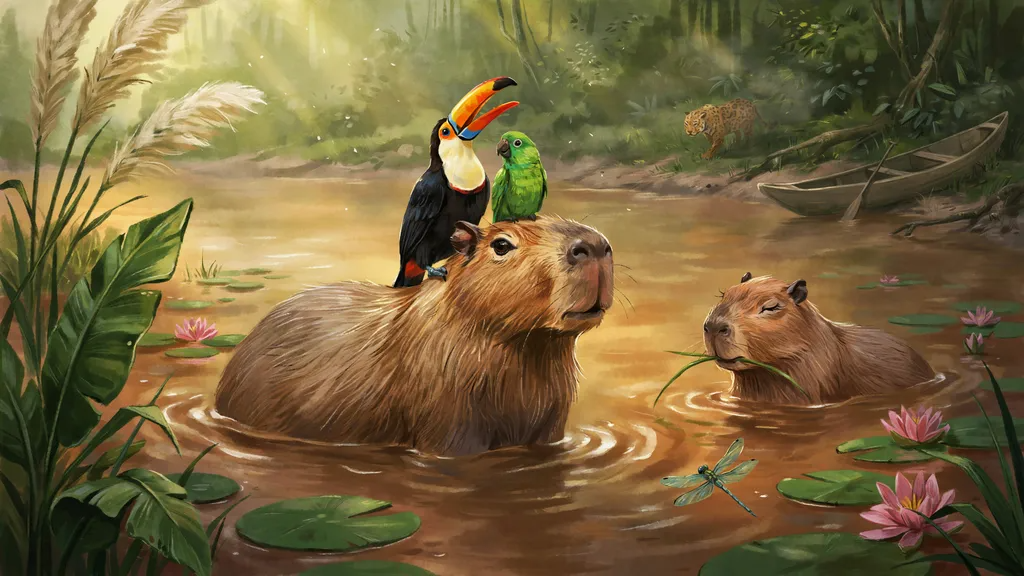
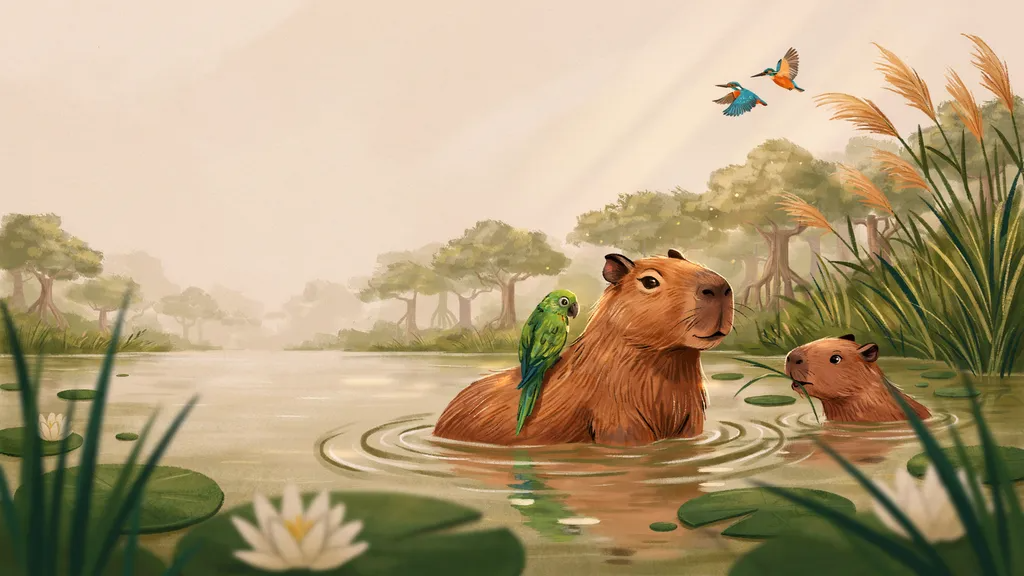
Friendliness is a famous trait of this unique large rodent that makes them stand out from almost any other wild animal. Capybaras are so gentle that they often let other animals come right up to them without showing any fear or anger. Birds like egrets and cattle tyrants will land on their backs to pick off bugs, giving the capybara a nice little spa treatment while finding a snack. Monkeys, rabbits, and even turtles have been spotted sharing space or napping next to a relaxed capybara in the afternoon sun. People call them the most chill animal in the world because they rarely start a fight and prefer to walk away from trouble. This peaceful attitude means a large rodent can live alongside many different species in the wild without causing any harm or stress to their neighbors in the great outdoors.
Threats in the Wild
Life is not always easy for a wild large rodent facing tough challenges in its natural South American habitat. Big cats like jaguars and pumas look at capybaras as a tasty meal and will try to catch them near the riverbanks. Caimans, which are smaller relatives of alligators, also lurk in the dark waters waiting for a chance to grab an unwary swimmer. Even large birds of prey like harpy eagles can swoop down from the sky to snatch up tiny baby pups that stray too far from the herd. Humans sometimes hunt them for their meat and thick skin, or build new roads and farms that take away their favorite grassy homes. Protecting the rivers and marshes helps give every large rodent a fighting chance to live a long, safe life surrounded by their family and friends in nature.
Fun Facts About Capybaras
Learning cool trivia about a fascinating large rodent makes studying nature feel like an amazing treasure hunt. Did you know that the scientific name for a capybara means water hog in ancient languages? It is a funny name because they are not pigs at all, but they do make grunting sounds that sound a bit like a little farm animal. Their front incisor teeth can grow up to three inches long if they do not wear them down by chewing on tough wood and thick grass. They can even sleep in the water with just their noses poking out of the surface to catch a quick nap without sinking. People all over the internet share funny pictures and videos of this friendly large rodent wearing hats or sitting in hot tubs because they look so calm. Nature is full of incredible creatures, but this giant swimmer definitely wins the prize for being the coolest and biggest member of the rodent family!
Conclusion
Learning about the amazing capybara shows us how wonderful and diverse the animal kingdom really is on our planet. This friendly large rodent teaches us the value of staying calm, taking care of our friends, and enjoying a nice long swim on a warm sunny day. Protecting their river homes ensures future generations can watch these gentle giants play in the wild. Have you ever seen a capybara in real life or at a local zoo? Share your thoughts or favorite animal stories in the comments below!
Capybara Fact Sheet
| Feature | Detail |
| Common Name | Capybara |
| Scientific Name | Hydrochoerus hydrochaeris |
| Animal Type | Mammal (Rodent) |
| Average Weight | 75 to 140 pounds |
| Lifespan | 8 to 10 years in the wild |
| Habitat | Wetlands, marshes, and riverbanks in South America |
| Diet | Herbivore (grasses, reeds, and aquatic plants) |
Frequently Asked Questions
What is the biggest large rodent in the world?
The capybara is the largest living rodent E in the entire world, often growing as heavy as a large dog.
Where do capybaras live naturally?
They live in South America near slow-moving rivers, flooded grasslands, and tropical marshes where water is always nearby.
Are capybaras friendly to humans and animals?
Yes, they are very gentle and calm, and they often share space peacefully with birds, monkeys, and other wildlife.
What kind of food do capybaras eat?
They are strict herbivores that love to munch on fresh river grasses, aquatic plants, and reeds.
Can capybaras swim underwater?
Yes, they are excellent swimmers and can hold their breath underwater for up to five full minutes to escape danger.
Do capybaras live alone or in groups?
They live in social groups called herds that can range from ten to twenty members, or even larger during wet seasons.