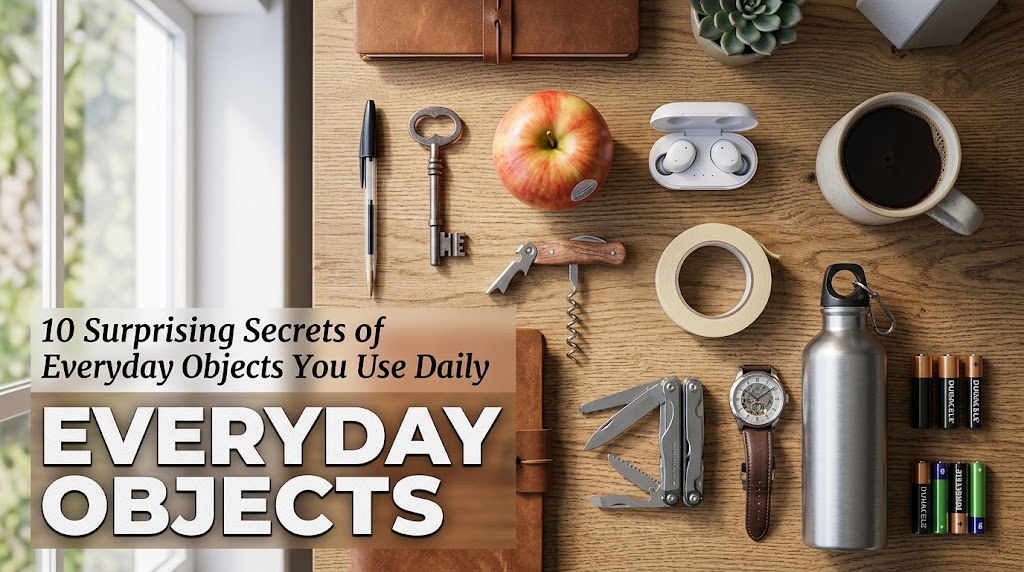
Look around your room right now. You are surrounded by simple tools that help you live your life. We use many Everyday Objects without thinking twice about them. A metal fork helps us eat dinner. A soft towel dries our wet hands. A small plastic key unlocks our front doors. These items seem very basic. Yet, each item has a special history and a clever purpose.
I used to ignore these simple tools. Then one day, I learned why coffee mug handles are shaped so strangely. That small discovery changed my view completely. Now, I see clever engineering in almost everything around my home. Designers spent years perfecting these small tools for us. In this guide, we will explore the secret features of common everyday objects. You will learn fresh hacks, fun facts, and smart tricks today.
Clever Secret Features Hidden on Household Tools
Many items in your home have tiny details you might ignore. These small details are actually helpful tools. For example, look closely at a tape measure. The metal end has a tiny slot. You can hook that slot onto a nail head. This holds the tape firmly in place while you measure walls alone.
Another great example is the hole in a pasta spoon. Many people think it just drains hot water. However, that hole measures one perfect portion of dry spaghetti. You can test this trick in your kitchen tonight. These tiny design choices on everyday objects save us time and energy every single day.
How Simple Kitchen Items Make Cooking Easier
Your kitchen is full of smart inventions that make meals simple. Take the hole in the handle of your frying pan. It is not just for hanging the pan on a rack. You can slide your wooden stirring spoon right into that hole. This keeps sticky sauce from dripping onto your clean stove top.
Plastic wrap boxes also hold a secret trick. Look at the sides of the box. You will find small push-in tabs. Pressing those cardboard tabs holds the heavy plastic roll inside the box. Then, the roll will not fall out while you pull a wrap sheet. Simple everyday objects like these keep your kitchen running smoothly and cleanly.
The Interesting History Behind Common Things We Use
Most items in your bedroom or kitchen have long, fascinating histories. Erasers were not always made of rubber. Long ago, bakers used squishy bread crumbs to erase dark pencil marks. Rubber erasers were invented later by accident. A scientist picked up rubber instead of bread by mistake!
Blue jeans also have a cool origin story. Those tiny copper rivets on your jeans pockets are not just for style. Gold miners in the 1800s kept tearing their pants pockets with heavy metal tools. A tailor added tiny metal rivets to make the pockets super strong. Today, these everyday objects keep that same rugged design.
Smart Organizing Hacks Using Basic Supplies
You do not need to buy expensive plastic containers to organize your house. Simple supplies around your room work great. Bread clips make fantastic wire labels. Just write “TV” or “Lamp” on a clip with a marker. Then snap it onto your messy power cables behind the desk.
Shoe boxes can also keep your drawers tidy. Cut a shoe box into flat cardboard strips. You can slot those strips into your dresser to organize your socks. Transforming everyday objects into storage tools keeps your bedroom neat and clutter-free.
Unexpected Ways to Reuse Common Items
Throwing away trash is easy, but reusing items saves money. Empty glass pasta jars make amazing storage containers. You can wash a glass jar and store dried beans, pennies, or pencils inside. Glass jars look neat on open wooden shelves.
Old cotton t-shirts can also be reused as soft cleaning rags. Cut an old shirt into small square pieces. Cotton fabric cleans glass mirrors without leaving messy lint behind. Reusing everyday objects helps protect our planet while keeping your home spotless.
Essential Everyday Objects for Easy Home Care
Keeping a home clean takes effort, but basic tools make it fast. A simple rubber squeegee is perfect for removing pet fur from rugs. Drag the rubber edge across your carpet to collect loose cat hair instantly. It works better than a vacuum cleaner.
Baking soda is another miracle item in the house. You can mix baking soda with water to make a cleaning paste. Rub this paste onto dirty sink handles to make them shine. Sticking to these reliable everyday objects makes house chores quick and painless.
How Technology Transformed Our Common Items
Technology changes how our favorite tools work every decade. Think about the wrist watches people used long ago. Old watches only showed the current time using small moving hands. Today, smart watches track your heart rate, count your steps, and read messages.
Even simple toothbrushes are much better now. Electric toothbrushes use tiny motors to scrub your teeth safely. They even chirp when you brush for two full minutes. Tech upgrades turn simple everyday objects into helpful digital assistants.
The Science Behind Simple Physical Mechanics
Many household items use basic physics concepts to work properly. Consider a simple metal door hinge. Hinges allow heavy wooden doors to swing open easily with one small push. The hinge redistributes weight so you do not strain your muscles.
Scissors also rely on simple physical leverage. Two sharp blades cross paths at a central metal pivot point. When you squeeze the plastic handles, force multiplies at the sharp edges. Understanding how everyday objects operate makes you appreciate simple engineering.
Why Good Design Matters for Simple Items
Designers work hard to make products safe and comfortable for everyone. Look at the curved handle of a vegetable peeler. The soft rubber grip stops your hand from slipping when wet. Good design prevents accidents while cooking dinner.
Ballpoint pens also feature thoughtful design details. Most pen caps have a small hole right at the top. That hole allows air to pass through if someone accidentally swallows the cap. Thoughtful safety details in everyday objects protect people without them even knowing it.
Easy Maintenance Tips to Make Items Last Longer
Taking care of your belongings saves money over time. Wooden cutting boards need special care after dishwashing. Rub a few drops of food-grade mineral oil onto the wood monthly. This stops the wood from cracking or warping.
You should also clean your metal nail clippers regularly. Wipe the cutting edges with rubbing alcohol to kill germs. Storing tools in a dry drawer prevents orange rust. Caring for your everyday objects ensures they work perfectly for many years.
Complete Details of Common Household Items
| Object Name | Original Purpose | Hidden Secret Feature or Hack | Average Lifespan |
| Tape Measure | Measuring distances and walls | Has a nail slot and serrated marking edge | 5 to 10 Years |
| Pasta Spoon | Stirring and scooping noodles | Center hole measures 1 serving of spaghetti | 10+ Years |
| Frying Pan | Cooking and frying foods | Handle hole holds stirring spoons neatly | 3 to 7 Years |
| Blue Jeans | Durable work trousers | Copper rivets prevent pocket seams from tearing | 4 to 8 Years |
| Bread Clips | Sealing plastic bread bags | Works as labeled cord organizers behind desks | Indefinite |
| Glass Jars | Preserving store foods | Reusable storage for pantry items or office pens | Lifetime |
Frequently Asked Questions
What are the most common everyday objects in a home?
The most common items include utensils, towels, keys, chairs, mugs, and lamps. These basic items help us eat, rest, clean, and work comfortably every day.
How can I reuse old plastic bottles at home?
You can cut plastic bottles in half to make plant pots. You can also use top halves as funnels for pouring liquids safely without spills.
Why do some everyday objects have small holes in them?
Holes often serve safety or utility purposes. Pen caps have holes for airway safety, while pot handles have holes for hanging or resting spoons.
What is the difference between LSI and semantic terms?
LSI keywords are closely related words that match search intent. Semantic terms help search engines understand the broader context and meaning of your article topic.
How do I keep household items organized on a budget?
Use empty cardboard boxes, glass jars, and bread clips. Reusing items saves money while keeping your rooms clean and neat without extra cost.
Why do jeans have tiny copper buttons on the pockets?
Those tiny copper buttons are called rivets. They reinforce stress points on the fabric so pockets do not tear under heavy weight.
Conclusion
Simple everyday objects make our lives smoother, safer, and much easier. From the small hole in a pasta spoon to the tiny rivets on your blue jeans, smart engineering is everywhere. When you take a moment to look closely at these tools, you discover clever secrets that save time and money.
Try using one of the organization hacks or kitchen tricks you learned today! Which household item surprised you the most? Share your favorite home hacks with friends, or leave a comment below with your own clever tips!