
Have you ever felt a sudden pain or swelling in your leg and wondered what it meant? Doctors often use a handy tool called the DVT Wells Score to figure out if that pain might be a deep vein thrombosis. A deep vein thrombosis, or DVT, is just a fancy name for a blood clot that forms deep in your body, usually in your leg. This clot can be dangerous if it moves, so catching it early is very important. Think of the dvt wells score as a smart checklist. It helps medical professionals decide who needs extra tests and who is likely safe. By looking at your symptoms and your history, this tool gives a clear path forward for your care. It is a quick, safe, and helpful way to make sure you get the right treatment exactly when you need it most.
What Is a DVT?
A DVT happens when a blood clot forms in a deep vein, typically in the thigh or lower leg. These clots can slow down blood flow, which causes that uncomfortable swelling and pain you might notice. While most clots stay in the leg, some can break loose and travel to the lungs. This is why doctors take leg pain very seriously. The dvt wells score helps them separate a simple muscle strain from a real medical concern. It is like a puzzle where every piece of information helps the doctor see the full picture.
Why Do Doctors Use the Wells Score?
Doctors use the dvt wells score because it is fast and reliable. Instead of sending every single patient for expensive scans, this tool acts as a filter. It helps doctors decide who truly needs an ultrasound to check for a clot. When I talk to friends about this, I explain that it keeps healthcare simple and prevents unnecessary worry. By using the dvt wells score, medical teams can focus their time and energy on patients who are at the highest risk. It is a great example of how science makes daily medical decisions much safer and easier.
How the Scoring System Works
The dvt wells score looks at several specific points. For instance, have you had a recent surgery? Is your leg swollen, red, or warm to the touch? The doctor adds up points for each “yes” answer. A higher score means there is a higher chance that a clot is present. A lower score suggests the symptoms might be caused by something else, like a minor injury. It is a very structured way to measure risk. Because the dvt wells score is so systematic, it helps ensure that everyone gets the same level of care, regardless of which doctor they see.
Common Signs to Watch For
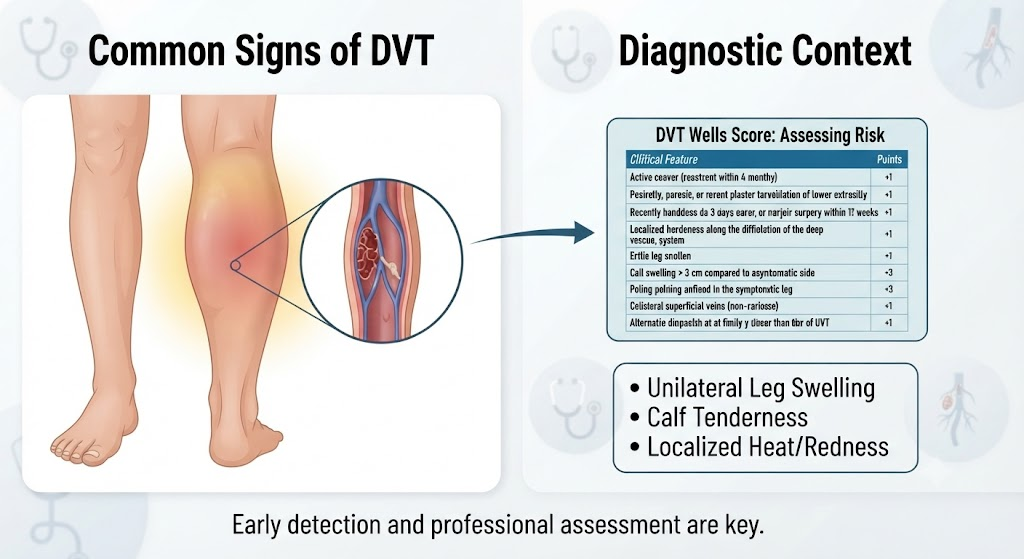
When you look at your own health, it helps to know what to look for. Common signs include swelling in one leg, tenderness, or a feeling of heat in the calf area. If you notice these things, your doctor might calculate your dvt wells score during your visit. Remember, these symptoms can sometimes happen for other reasons, like a twisted ankle. That is exactly why we use the dvt wells score to tell the difference. It turns a scary “what if” into a clear, manageable medical plan. Staying aware of your body is always the first step in staying healthy.
Risk Factors That Increase Your Score
Certain things can make your risk of a clot go up. Being inactive for a long time, such as on a very long flight, can be a factor. Recent surgeries, a family history of clots, or certain medical conditions also add points to the dvt wells score. Even if you have these risk factors, it does not mean you definitely have a clot. It just means the dvt wells score will be higher, signaling the doctor to look a bit closer. Knowing these factors helps you have a better conversation with your healthcare provider about your personal risk.
The Role of Recent Surgery
If you have had surgery recently, your body is working hard to heal. During this time, your blood might clot more easily, which is a natural response. Because of this, doctors always check if you have had a procedure in the last few weeks when calculating your dvt wells score. It is a standard safety check. I always tell people that being honest with your doctor about your recent medical history is key. By giving them the right information, the dvt wells score becomes a very powerful tool to keep you safe while you recover.
Comparing Symptoms: DVT vs. Muscle Strain
It is very common to confuse a muscle pull with a blood clot. A muscle strain usually happens after exercise and feels better with rest. A DVT, however, often involves persistent, deep swelling that does not go away. The dvt wells score is designed to help distinguish these two very different problems. If your leg pain feels different than a normal cramp, don’t ignore it. Bringing up the dvt wells score with your doctor shows you are proactive about your health. It is always better to be safe and get checked out.
What Happens After the Score?
Once the doctor finishes the dvt wells score, they will tell you what the result means. If the score is low, you might just need to monitor the leg or get a simple blood test. If the score is high, the doctor will likely order an ultrasound immediately. This test gives a live picture of the veins in your leg to see if a clot is there. Understanding the dvt wells score process helps remove the mystery. You will know exactly why the doctor is choosing a specific test, which makes the whole experience much less stressful.
The Importance of Professional Assessment
Never try to guess your own dvt wells score at home to diagnose yourself. While it is good to know what the tool is, only a trained doctor can interpret the results correctly. They consider things that you might miss, like your blood pressure or other hidden symptoms. The dvt wells score is a professional instrument, not a home diagnostic kit. Always seek help from a clinic or hospital if you are worried about your leg. They can provide the expert care and peace of mind that you truly deserve.
Lifestyle Tips to Prevent Clots
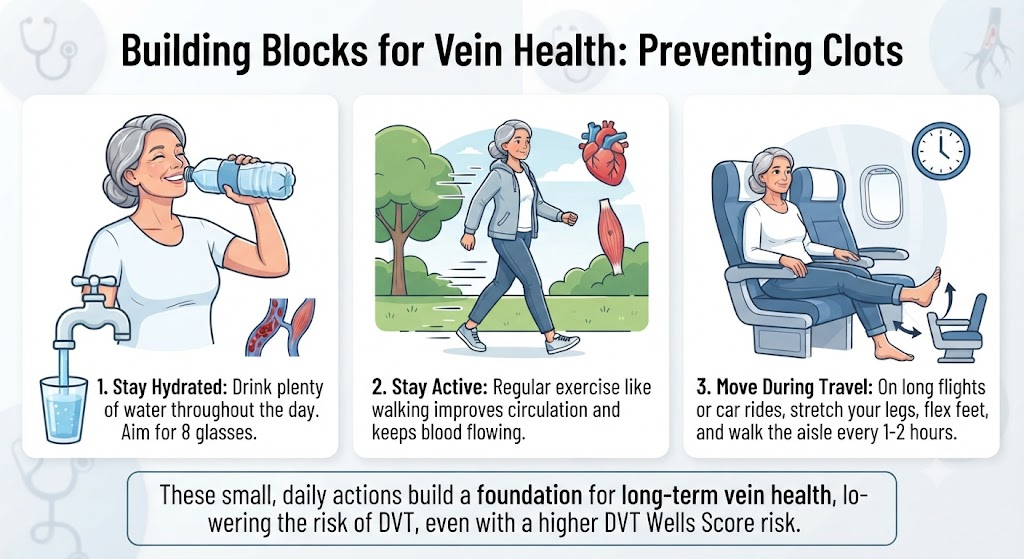
You can do a lot to keep your veins healthy. Drinking plenty of water, staying active, and moving your legs during long trips are all great habits. These small actions help keep blood flowing smoothly, which naturally lowers your risk. Even if you have a high dvt wells score risk in the future, these healthy habits provide a strong foundation. Think of these tips as building blocks for your long-term wellness. A little bit of movement each day goes a long way in keeping those veins happy and strong.
Summary of DVT Assessment
| Feature | Details |
| Tool Name | DVT Wells Score |
| Purpose | Estimate the probability of DVT |
| Key Symptoms | Swelling, redness, pain, warmth |
| Risk Factors | Surgery, immobility, family history |
| Common Outcome | Ultrasound or blood test (D-dimer) |
| Goal | Early detection and safe treatment |
Frequently Asked Questions
1. Is the DVT Wells Score painful?
No, it is just a set of questions and a physical exam. You won’t feel anything except the doctor checking your leg.
2. Can I calculate my own DVT Wells Score?
You can look it up, but please don’t use it to diagnose yourself. Only a doctor can accurately evaluate your risks.
3. What does a high score mean?
A high score means there is a strong possibility of a clot, so the doctor will usually order an ultrasound.
4. Are there other tests besides the score?
Yes, doctors often use a blood test called a D-dimer along with the dvt wells score to get more information.
5. How long does the assessment take?
It is very quick! Most doctors can complete the dvt wells score assessment in just a few minutes during your visit.
6. Does a low score mean I have nothing to worry about?
A low score usually means the risk is low, but you should still follow your doctor’s advice if symptoms continue.
Conclusion
Understanding the dvt wells score is a fantastic way to take charge of your vascular health. It is a simple, smart tool that helps doctors provide the best care possible for leg pain and swelling. Remember, your health is your most valuable asset, and being informed is the best way to protect it. If you ever feel concerned about your legs, don’t hesitate to reach out to a professional. Have you ever had to get your legs checked by a doctor before? Share your experience in the comments below, or talk to your doctor today to learn more about keeping your veins healthy!