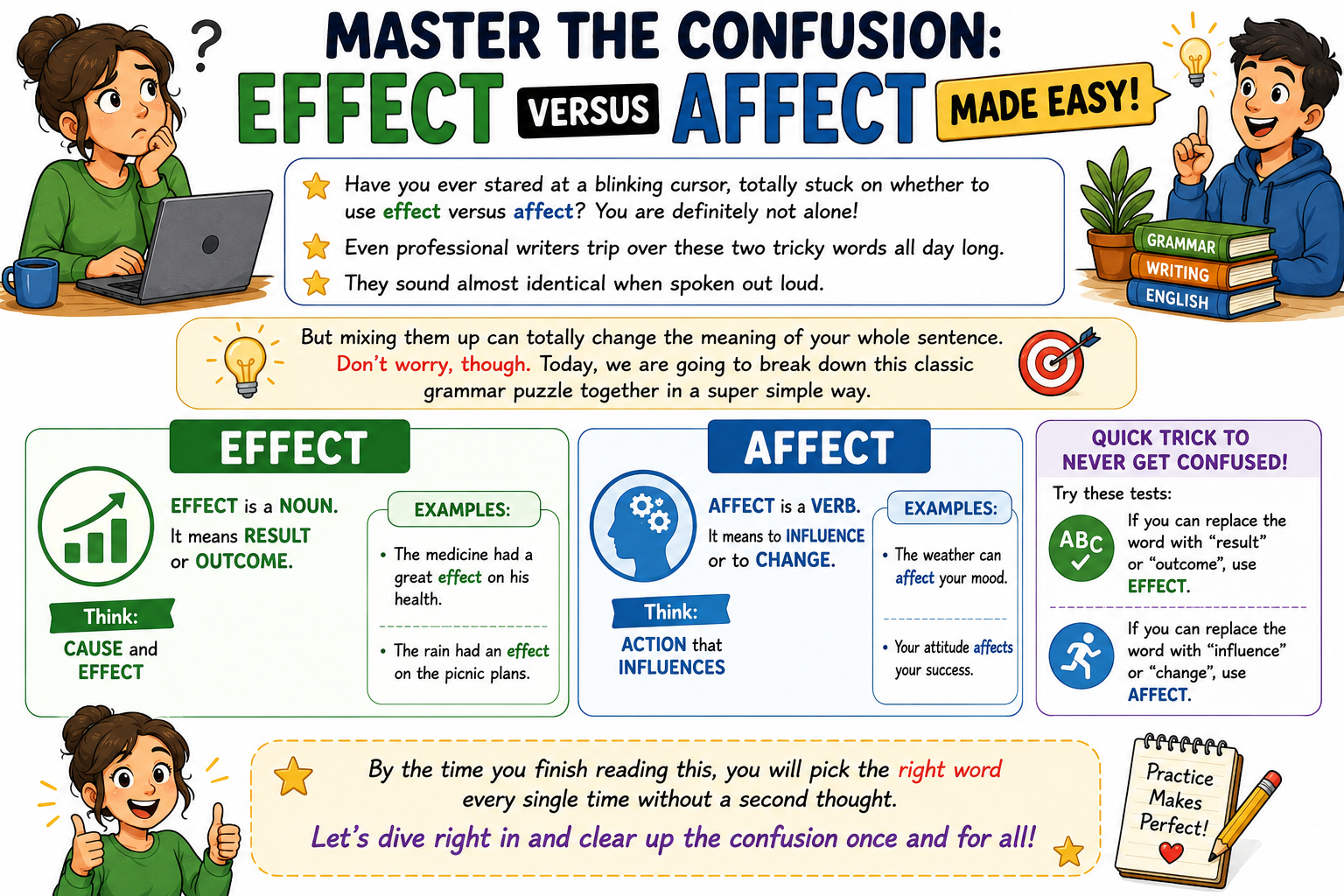
Have you ever stared at a blinking cursor, totally stuck on whether to use Effect Versus Affect? You are definitely not alone! Even professional writers trip over these two tricky words all day long. They sound almost identical when spoken out loud. But mixing them up can totally change the meaning of your whole sentence. Don’t worry, though. Today, we are going to break down this classic grammar puzzle together in a super simple way. By the time you finish reading this, you will pick the right word every single time without a second thought. Let’s dive right in and clear up the confusion once and for all!
Quick Comparison Table
| Feature | Affect | Effect |
| Part of Speech | Usually a verb | Usually a noun |
| Core Meaning | To influence or to produce a change | The result of a change or an outcome |
| Easy Memory Trick | Action = Affect | End result = Effect |
| Example Sentence | The rain will affect the game. | The rain had a bad effect. |
What Does Affect Actually Mean?
When you want to talk about changing something, you usually need the word affect. Think of affect as an action word, or a verb. It means to cause a change or to make a difference in something else. For example, a sudden loud noise might affect your concentration while doing homework. Or, missing a good night’s sleep will definitely affect your mood the next morning. Whenever you are describing something active happening to an object or a person, reach for affect. It is the engine that drives the action in your sentence!
Understanding the Word Effect
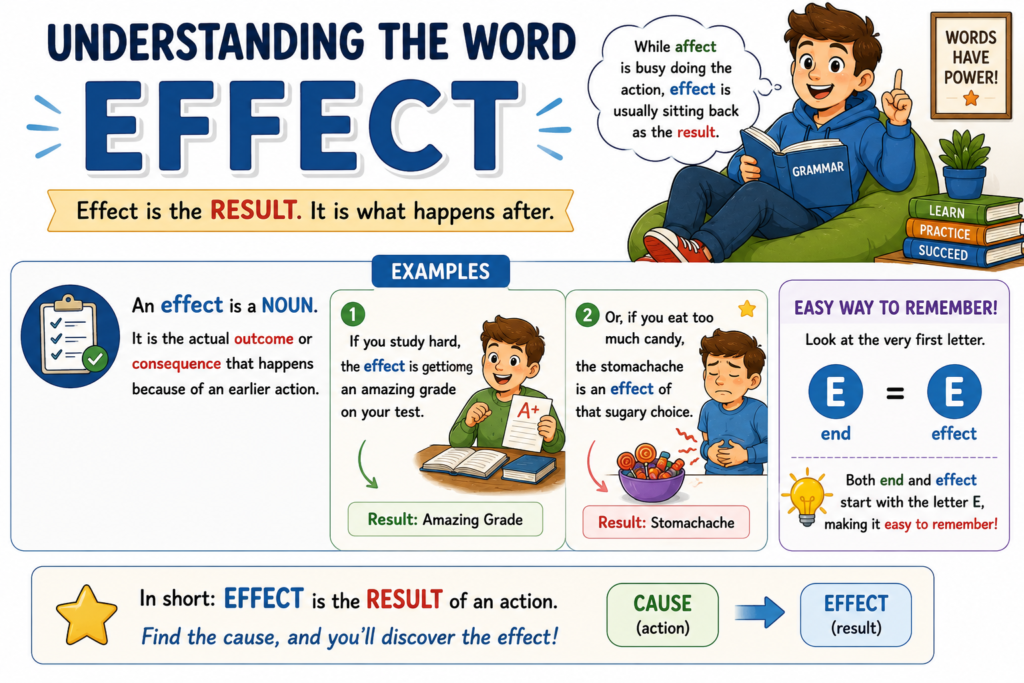
While affect is busy doing the action, effect is usually sitting back as the result. An effect is a noun. It is the actual outcome or consequence that happens because of an earlier action. For instance, if you study hard, the effect is getting an amazing grade on your test. Or, if you eat too much candy, the stomachache is an effect of that sugary choice. A great way to keep them straight is to look at the very first letter. Both end and effect start with the letter E, making it easy to remember.
The RAVEN Trick to Remember Forever
Grammar rules can feel super boring and hard to memorize. That is why smart writers love using fun memory tricks called acronyms. The best trick for mastering effect versus affect is the word RAVEN. It stands for Remember Affect Verb, Effect Noun. Whenever you are writing a sentence and feel completely lost, just picture a black bird sitting on your desk. Ask yourself if the word you need is an action or a result. This silly little trick saves so much time and stops embarrassing typos before they even happen on the page.
Common Examples in Everyday Life
Let’s look at some real-life situations where people mix up effect versus affect. Imagine you step outside on a freezing winter morning without a warm winter coat. The icy wind is going to affect your body temperature very quickly. The shivering you do right after is the effect of the cold air. Another great example happens at school. A good teacher can positively affect a student’s entire future. The wonderful effect of that help is a lifelong love of reading. Seeing these pairs side by side makes the rule stick in your brain.
The Special Exceptions You Should Know
In the English language, almost every single rule has a few sneaky exceptions. Even though affect is almost always a verb, it can sometimes be a noun in psychology. Doctors and therapists use affect to describe someone’s outward emotional expression. On the flip side, effect can sometimes act as a verb when you “effect a change,” meaning you bring something into existence. But honestly? You will rarely need those tricky exceptions in daily writing. Sticking to the golden verb and noun rule will cover ninety-nine percent of what you ever need to type.
Why Getting It Right Matters So Much
You might wonder why a tiny spelling difference causes such a big fuss. Communication is how we connect with friends, teachers, and the whole world around us. Using the right grammar builds instant trust with anyone reading your words. If a reader spots a mix-up with effect versus affect, it can distract them from your brilliant ideas. Taking just one extra second to check your sentence shows that you really care about quality. Plus, writing clearly feels amazing when you finally nail it on the very first try!
Fun Ways to Practice Without Stress
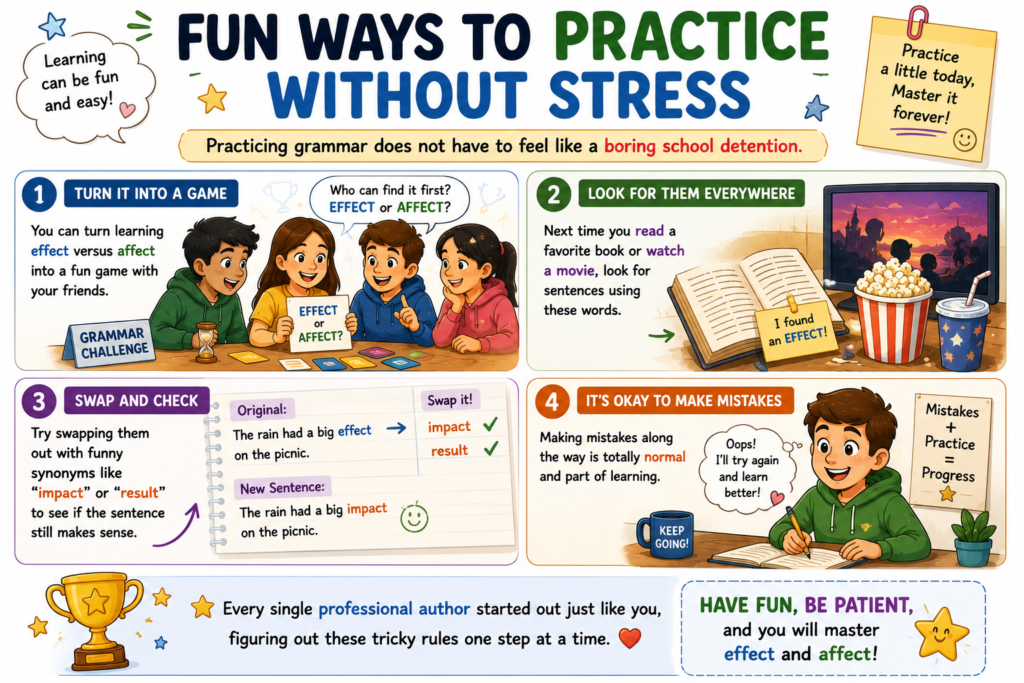
Practicing grammar does not have to feel like a boring school detention. You can turn learning effect versus affect into a fun game with your friends. Next time you read a favorite book or watch a movie, look for sentences using these words. Try swapping them out with funny synonyms like “impact” or “result” to see if the sentence still makes sense. Making mistakes along the way is totally normal and part of learning. Every single professional author started out just like you, figuring out these tricky rules one step at a time.
Conclusion
We have journeyed through the wonderful world of effect versus affect together today. Remember that affect is your active verb that causes a change. Meanwhile, effect is your trusty noun that shows the final result. Keep the RAVEN trick in your back pocket for whenever you feel stuck on a sentence. With a little bit of practice, you will never have to stress over these two words again. Your writing will look clean, professional, and super clear to everyone who reads it. Keep practicing and happy writing!
Frequently Asked Questions
Which word is a verb, effect or affect?
The word affect is almost always used as a verb. It represents an action or the process of influencing something.
Is effect always used as a noun?
Most of the time, yes! Effect acts as a noun representing a result. However, in rare formal phrases like “to effect change,” it can function as a verb.
How can I easily tell them apart in a sentence?
Just use the RAVEN trick: Remember Affect Verb, Effect Noun. If you need an action word, pick affect.
Can I use the word impact instead of both?
Yes, using “impact” can sometimes save you from making a mistake, but learning the correct use of effect versus affect makes your writing much more precise.
Does a cold weather change affect your mood?
Yes! The cold weather can affect your daily mood, and feeling sleepy is a common effect of those dark winter days.
Why are these two words so frequently confused?
They are homophones, which means they sound almost identical when spoken out loud, making spelling them correctly a common challenge for many writers.